July 22, 2026
The GOAT: Bassist George Porter, Jr.
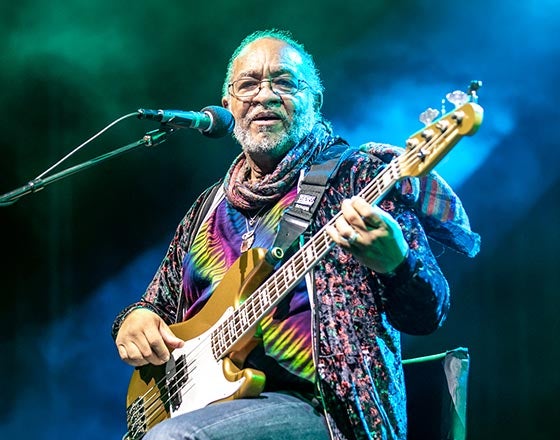
There are people with rhythm. People with groove. People who have impeccable timing, boogie fever, hustle and flow. Then, there are other people who seem to arrive here from outer space, don a human body, pick up an instrument, and upgrade our understanding of music with an undiluted injection of interdimensional cosmic energy.
These people tend to come from New Orleans. People like bassist George Porter, Jr.
George Porter Took a Different Route to His Bus Stop, and We Got Funk
Porter grew up on Perdita Street, in a NOLA neighborhood where young black men faced incredible odds for survival. On the church organist’s suggestion, his mother, a well-known singer in their church choir, enrolled him in music lessons to give him a skill, a chance at a livelihood, and somewhere to go other than the streets. His grandmother bought him a classical-style guitar for his eighth birthday, which he loved so much that he slept with it in the bed beside him. George’s first teacher took that as a cue to teach young George classical fingering techniques and train him in that tradition.
Two years later, on his way to his lesson, George decided to take a different path through the neighborhood to a different bus stop. The path led him a few blocks toward Tulane Avenue, where he caught the lilt of music on the street. He followed it. The music led him to a set of steps where bassist Benjamin “Poppi” Francis and a friend were playing the boogie-woogie blues standard “St. Louis Blues”--but using the classical-style fingering.
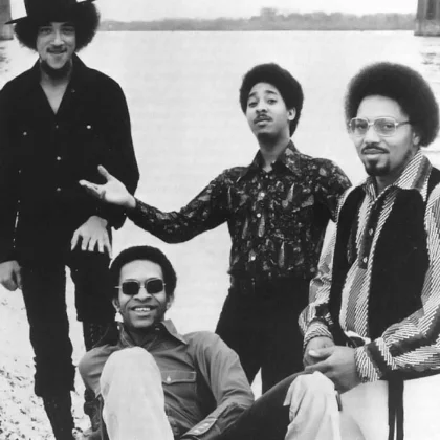
“Zigaboo” Modaliste, and later formed The Meters with Art Neville and Leo Nocentelli-
Photo courtesy of George Porter Jr. Official Website
George Porter’s life changed at that moment. That was the sound he wanted to play. About ten years after Porter arrived at this NOLA stoop, this moment would also change the landscape of American music.
When he took his boogie-woogie walking fingers style to his guitar lesson, well, that was the end of Porter’s training with that teacher. But Porter lived in one of the great music capitals of the world, so access to wildly inventive, disciplined, and devoted musicians was just a matter of finding them.
Porter kept playing his guitar, jamming with a kid in his neighborhood who’d become his best friend, drummer Joseph “Zigaboo” Modaliste. Poppi Francis gave Porter his first bass guitar and a few lessons to get him started. The Porter-Modaliste jam sessions continued, but now as a rhythm section, and they got good. Really, really good.
Porter earned his spot in the local blues scene as a teenager, sitting in with the likes of guitarists and singers Earl King and Walter “Wolfman” Washington. After one of these shows, keyboardist Art Neville approached Porter about forming a band. Porter said yes, included Zigaboo Modaliste to drum, and Neville introduced them to Leo Nocentelli, a guitarist. George, Art, Zig, and Leo. Eventually, this foursome became The Meters, a band that drove blues into a highly danceable, rhythmic groove full of syncopated beats. At the time, what The Meters made fell into the R&B category, but everyone who heard it knew there was no way you could call it R&B.
What everyone ended up calling it, thanks largely to Porter’s sick basslines (ahem, “Cissy’s Strut”), was funk.
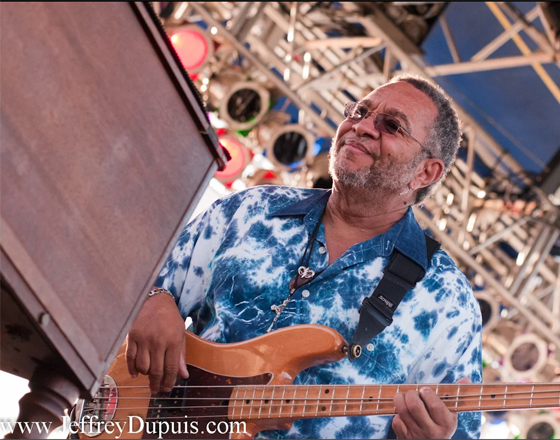 Gettin’ Funky, Y’all: George Porter, Jr. at the Peace Center
Porter’s career took off after NOLA producer Allen Toussaint signed them to a record deal. The deal led to a lot of attention, which led to The Meters performing for Paul and Linda McCartney at a private party on the Queen Mary. That’s where The Meters met Ron Wood and Keith Richards, and that’s how they ended up opening for the Rolling Stones on their 1975-1976 American and European tours.
By now, The Meters, along with Sly & the Family Stone and Parliament-Funkadelic, had shifted American pop music with something leaner, tighter, and irresistibly full of nasty grooves. They made America funky, and that sound—that unmistakable thump rumpus from George Porter, Jr.—influenced all the music that pioneered popular sound after the 70s, especially hip-hop and R&B.
When The Meters disbanded in 1977, the music world knew Porter as one of the best bassists alive. The biggest names in the industry hired him to play on their records. So maybe you’re reading this without being a George Porter fan, but we can guarantee you know him already. The “Lady Marmalade” bass line? Porter. Dr. John’s “Right Place, Wrong Time”? That’s Porter on the funky bass line. Tori Amos’s groundbreaking Boys for Pele? Porter on bass. Now guess who Grateful Dead drummer Mickey Hart had on speed dial for jams. Neville and Porter regrouped and formed The Funky Meters, with Porter continuing to play on albums for Paul McCartney, Robbie Robertson, David Byrne, Devon Allman, and Taj Mahal.
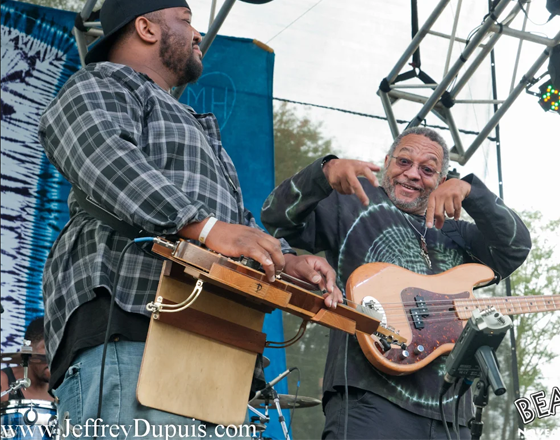 At this point in his career, George Porter, Jr., sits at the musical masters’ table. He mentors young players, advocates for New Orleans, and earned a Lifetime Achievement in Music Award. He’s got 23 Best Bassists Awards from Offbeat Magazine, and his status among musicians is god-like. But ask anyone who knows him, and they’ll tell you Porter is genuine, humble, and still humbly serves his hometown community.
His appearance here is a huge moment in musical history for Greenville, when we can be in the presence of one of the greats, up close and personal. Come hear George Porter, Jr., in The Mockingbird Aug. 20. Get your tickets for a funktastic time.