August 25, 2026
ZZ Top Facts, Mythology, and Lore
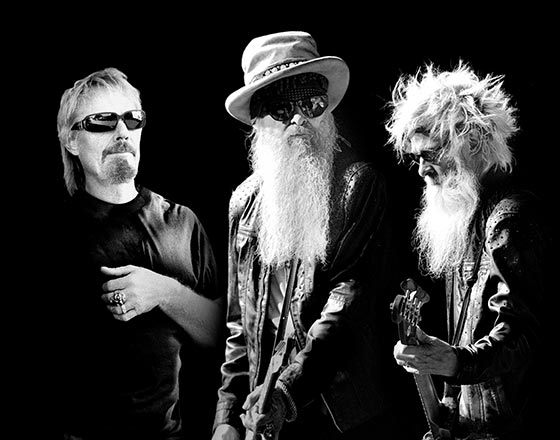
The beards. The spinning guitars. The pristine 1933 fire engine red Ford coupe with the ZZ blazes.
Now THIS is a band.
ZZ Top has been around. Around the block. Around the world. Around for a long time. The gritty, dirty riffs in their breakout hit “La Grange” set the tone for a long, lively career studded with iconic ZZ Top songs like “Legs,” “Sharp-Dressed Man,” “Tush,” and “Gimme All Your Lovin’”. Along the way, they’ve gathered the kind of myth and lore status that goes along with being a famous rock band.
Since The Bearded Ones will be here SEP 20, we thought it’d be fun to look at some of their most legendary band lore, including a little ZZ Top history and interesting facts.
ZZ Top History
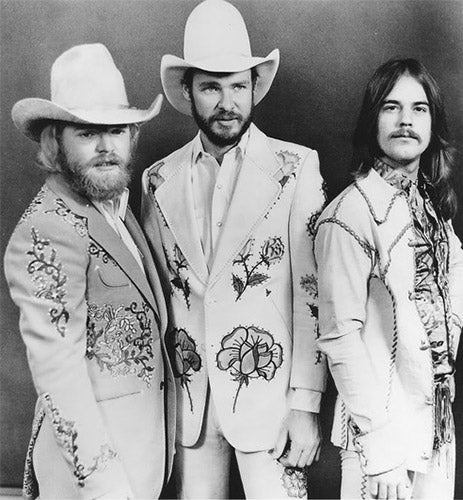
Before there was ZZ Top, there was Moving Sidewalks, Billy Gibbons’s first Houston band, an acid psychedelic garage outfit formed in 1966. Moving Sidewalks did well, opening for names like Jimi Hendrix and The Doors, giving Gibbons some local fame. In town, there was also a well-known blues boogie band making a name for themselves—American Blues, which happened to include two guys named Dusty Hill and Frank Beard. When Gibbons’s Moving Sidewalks bandmates got drafted to fight in Vietnam, he reinvented, pulling in his keyboard-bassist friend Laneir Greig. At this point, Gibbons cooked up the name ZZ Top. Beard, a drummer, joined Gibbons in this new endeavor. Soon, Stevie Ray Vaughn bassist Billy Ethridge replaced Grieg, but the band got a recording contract that Billy didn’t want to sign. So, he left.
This is where Dusty Hill enters. It’s 1969, and ZZ Top as we know it blooms in the rockosphere.
Those early years mark ZZ Top’s definition of itself, the band mixing up their Texas blues-and-rock roots music with double entendre lyrics and gift for down-and-dirty riffs. In 1973, they released Tres Hombres, the album that included “La Grange,” the song that put ZZ Top on the map.
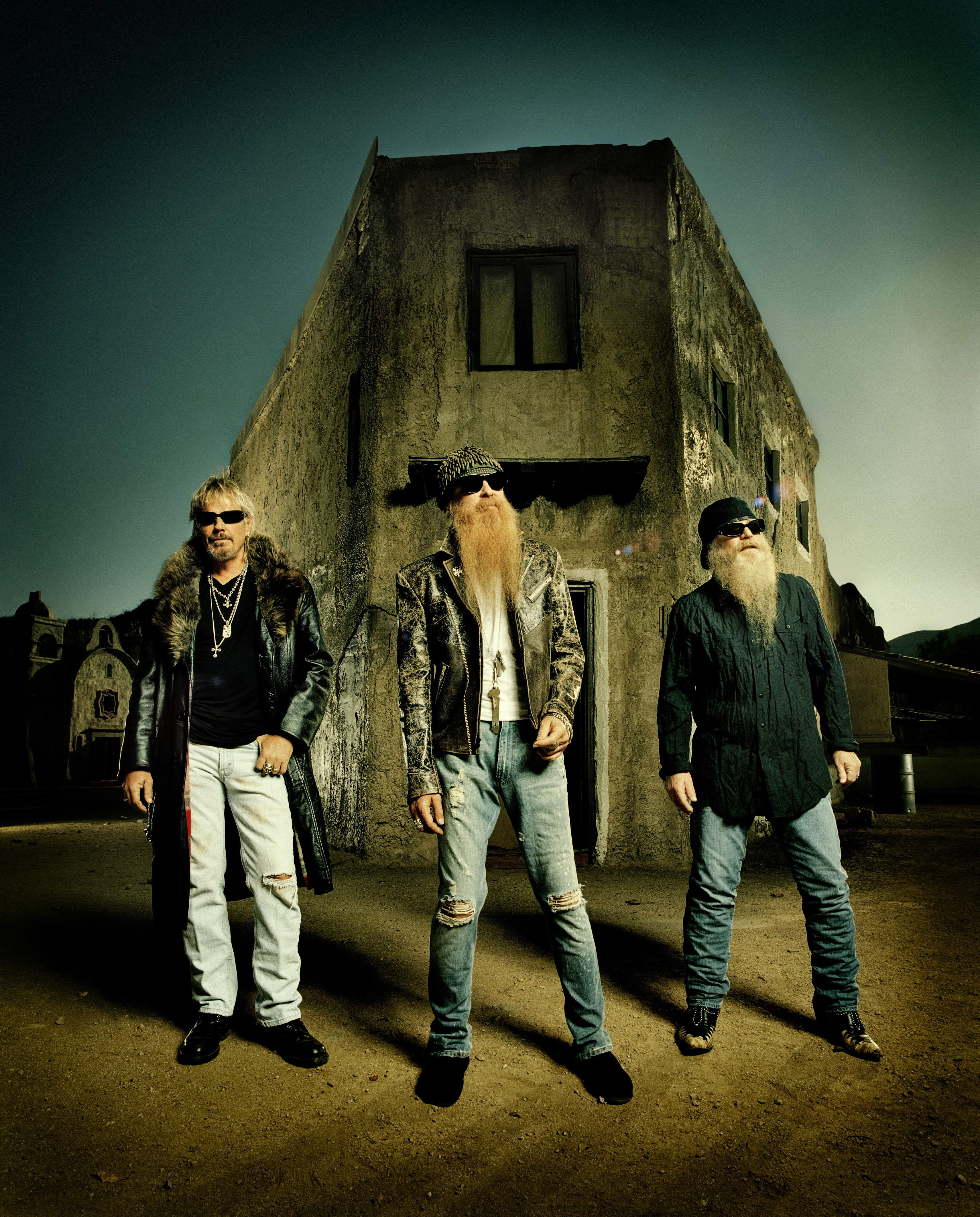
The next album, Fandango! (1975), brought them greater exposure and notoriety, thanks in part to the success of the single “Tush.” (You know the one ... “I ain’t asking for much/Lord take me downtown...” etc., etc.) The beards grew a little longer, and the universe was making space to hold what would become a ZZ Top-sized phenomenon, one they occupy to this day.
The rest of the 70s were good to the Boys from Texas. They released three more albums and gained momentum with “Cheap Sunglasses,” “Pearl Necklace,” and “I Thank You.” They experimented more with synthesizers, a keyboard technology becoming popular as the 1980s approached. ZZ Top was evolving into a new era, one that would make them worldwide superstars.
ZZ Top’s Eliminator Album
Commercially, ZZ Top hit paydirt with Eliminator (1983). The album’s release coincided with the early-80s MTV craze that upended the music industry and created a generation of young people ravenous for video music content. They’d returned after a brief hiatus with rabbinical-length beards (except Frank Beard, of course, who maintained a neat mustache), Ray-Bans, and spinning, fur-lined guitars. ZZ Top had a brand, and that brand was the epitome of Texas roadhouse cool.
Eliminator’s song list featured a lot of greatest hits material: “Gimme All Your Lovin’,” “Legs,” “Sharp-Dressed Man,” and “Got Me Under Pressure.” Their series of videos for these songs were written and shot like mini-movies, with the boys as the main characters in some very 80s plotlines involving their signature hot rod and beautiful, big-haired women. Audiences ate it up, and the ZZ Top brand remains instantly recognizable, even if you aren’t a fan.
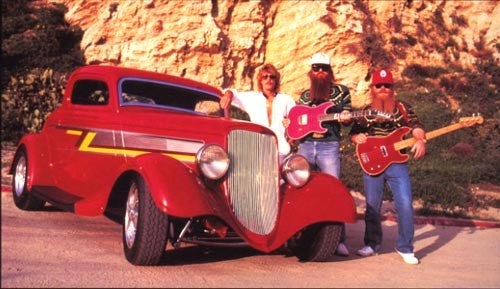
Ford ‘33 coupe that was every bit the member of ZZ Top that they were.
Afterburner and Afterwards
Since the wild success of Eliminator, ZZ Top has maintained their rock god status, releasing Afterburner (1985). Every single released from this album was a Top 40 hit, most notably “Sleeping Bag” and “Velcro Fly.” By the 1990s, they circled back to their guitar-driven early ZZ Top sound, securing a $35 million dollar deal with RCA, a Super Bowl halftime show, and inducted Cream into the Rock and Roll Hall of Fame. In 2004, they were inducted as well, by Keith Richards.
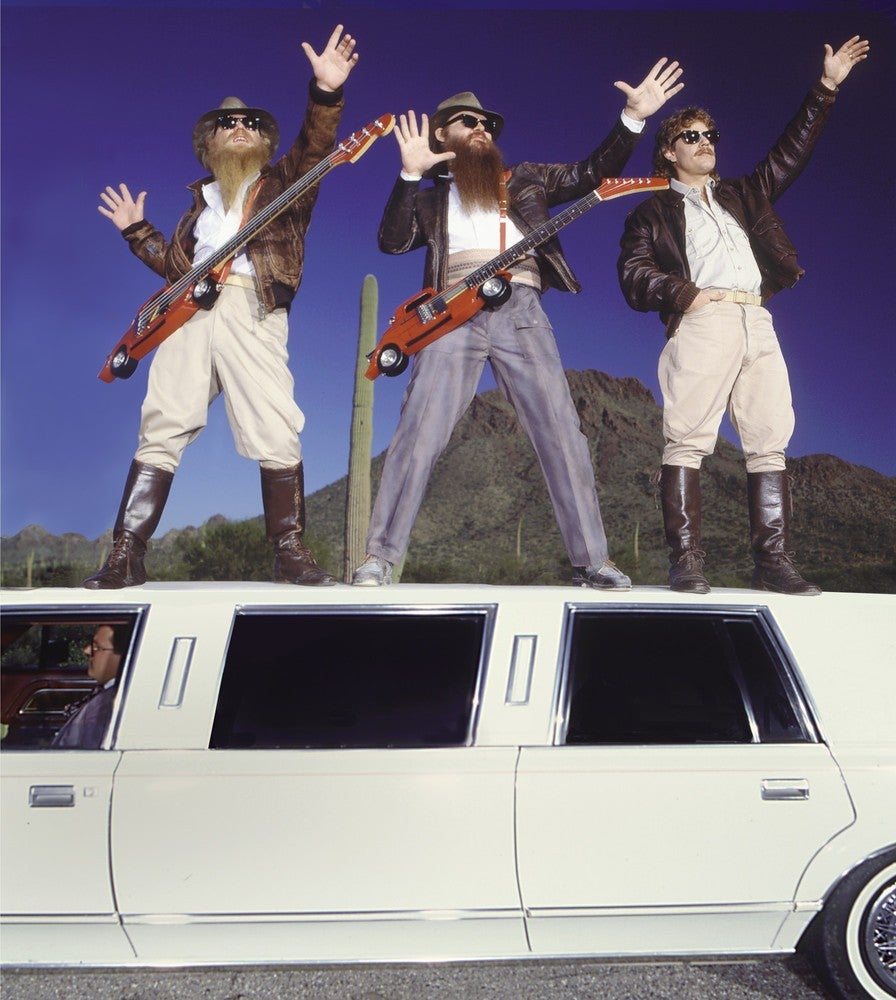
ZZ Top Trivia
With a career that spans from opening for Jimi Hendrix to Rock and Roll Hall of Fame induction by Keith Richards to sold out concerts almost six decades after they started, ZZ Top has its fair share of interesting facts. Here are a few of our favorites.
ZZ Top got the name by combining ZZ Hill and BB King, two of the band’s blues influences. Billy thought “ZZ King” was too much like BB King, so he proposed they use “ZZ Top” since a king is at the top.
To regain a sense of normalcy, Dusty worked at the Dallas-Ft. Worth airport for three months during ZZ Top’s 1978 hiatus. He also went fishing in Mexico.
The Eliminator hot rod belongs to Billy Gibbons. He bought a ‘33 Ford coupe from a woman in Tucson, then spent five years souping it up into one of the most recognizable cars of the 1980s.
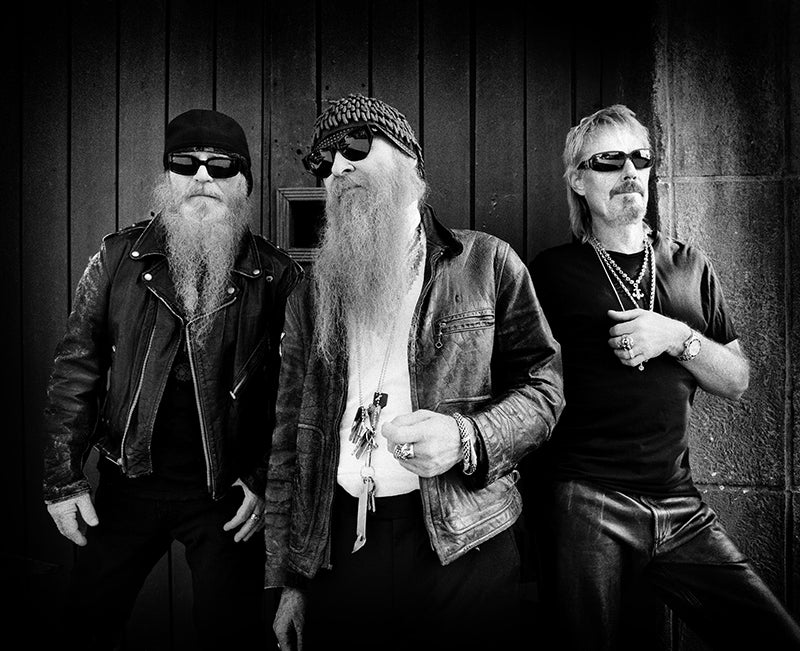
One of the other famous cars of the 80s is the Delorean from Back to the Future. ZZ Top appeared in Back to the Future III playing at a town festival in 1885. Period clothes and all.
Billy, Dusty, and Frank were 20 years old when they formed ZZ Top. When Dusty died in 2021, he named Elwood Francis as his successor, who plays with the band today.
Paula Abdul created the choreography for the “Velcro Fly” video.
Be part of the incredible story of ZZ Top. Get your tickets to see the band in the Peace Concert Hall on Sept. 20.